The Newport School Board & Population Pressure
By the close of the nineteenth century, the rapid construction of terraced rows between Malpas Road and the river wharves overwhelmed existing educational provision. The opening of the South Wales Glass Works, the expansion of the Newport Gas Works, and the establishment of local rail junctions brought hundreds of young working-class families into the neighbourhood.
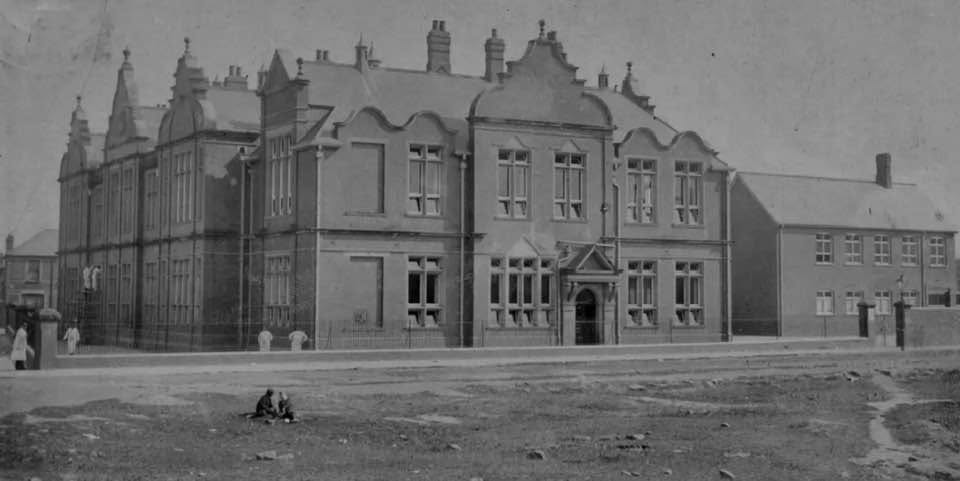
To address severe overcrowding, the Newport School Board commissioned a prominent new board school on Ailesbury Street. Opened at the turn of the twentieth century in 1901, the building conformed to contemporary progressive standards of municipal educational architecture, featuring lofty ceilings, tall segmentally-arched sash windows for daylight, and advanced cross-ventilation flues.
"Erected to provide elementary instruction for several hundred neighbourhood children, the red-brick gables quickly became the dominant civic landmark amidst the uniform slate roofs."
Departmental Organisation & School Life
Following standard Board School design principles of the era, the building was organised strictly into separate Boys, Girls, and Infants departments, each accessed via distinct perimeter entrances and walled tarred playgrounds to prevent congestion.
Logbooks from the early decades document the immediate impact of surrounding industrial rhythms on school attendance. Registers recorded seasonal absences during severe winter weather, outbreaks of infectious illness across the cramped terraces, and children leaving at the statutory minimum age to take up apprenticeships, boilingshed jobs at Lovell’s, or work as messengers for the railway sidings.
Survival & Continuous Service
Unlike the heavy industrial plants and sports grounds along Albany Street that were cleared or demolished during late-twentieth-century redevelopments, Crindau School survived intact.
Now operating as Crindau Primary School, the Edwardian red-brick and terracotta exterior remains essentially unchanged, serving as one of the few surviving late-Victorian civic anchors still fulfilling its original public purpose for the community.