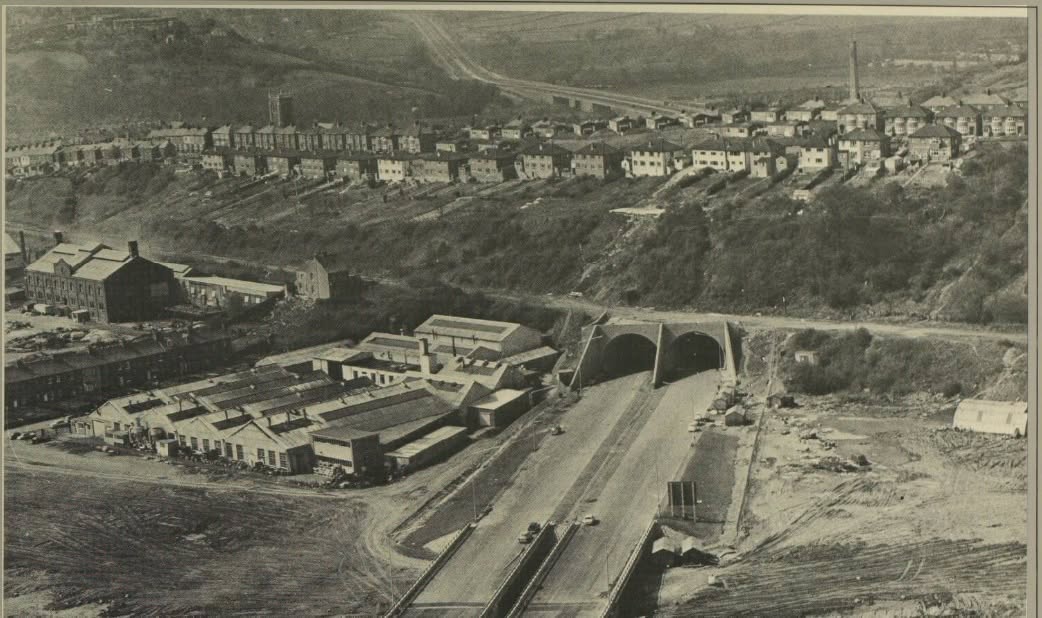
From Birmingham Forge to Albany Street
While Crindau's earlier industrial phase was defined by coal gas, chemical distillation, and heavy glass manufacture, the mid-twentieth century brought specialist light engineering into the neighbourhood. The most prominent addition was M. K. Mole & Son Ltd, an established toolmaking enterprise founded in Birmingham in 1835.
Seeking modern production space with direct rail access, the company relocated manufacturing from the English Midlands to Newport in 1950, taking over substantial premises known as the Crindau Works on Albany Street. The plant was equipped with drop-forging hammers, machine millers, stamping presses, and heat-treatment furnaces designed to produce hand tools to exacting tolerances.
"The name 'Mole Wrench' entered the English lexicon as an indispensable workshop standard, forged and assembled directly within the Crindau industrial corridor."
The Invention of the Mole Grip
The company achieved international renown through the ingenuity of managing director Thomas Catterick Mole. Following the Second World War, Mole patented improvements to adjustable hand vices and locking pliers, refining the classic toggle-linkage mechanism.
Between 1947 and the mid-1950s, a sequence of UK and overseas patents protected his design for a hand-held self-grip wrench that could be clamped, locked onto an irregular work piece with high mechanical force, and released by pressing an inner lever. Branded prominently as the Mole Wrench (and colloquially as 'Mole Grips'), the tool became a fixture of every shipyard, garage, and domestic workshop in Britain and across the Commonwealth.
Workforce & Tool Production
Crindau Works employed toolmakers, machinists, press operators, and assemblers. While adjacent works like Lovell's provided clerical and packing roles for women, Mole’s brought specialized engineering and metal-finishing jobs to the immediate vicinity.
Beyond the famous self-locking wrench in various curved, straight, and sheet-metal configurations, the Albany Street works turned out wider lines of mechanical equipment, including pipe-grips, bench clamps, die sets, and vehicle body-repair jacks.
Relocation and Legacy
By the mid-1970s, manufacturing capacity along the cramped Albany Street perimeter could no longer accommodate the output required for worldwide export. In 1976, M. K. Mole & Son relocated their main manufacturing operation to modern factory premises at St Brides, Wentloog, on the western outskirts of Newport.
The firm was later acquired by the American toolmaker Petersen Manufacturing (creators of the Vise-Grip), eventually becoming part of the multinational Irwin Industrial Tools group. The original Crindau Works buildings on Albany Street were systematically cleared and replaced by contemporary light-commercial storage, ending a distinguished chapter of post-war Welsh toolmaking on the site.